I watched my mother lose her driver's license because of poor eyesight. Then I discovered the tests her ophthalmologist had never seen.
 Dr. Caela Bennett
23 August 2026 • 5 minute read
Dr. Caela Bennett
23 August 2026 • 5 minute read

I am about to upset every ophthalmologist, every local optician, and every medical representative who has ever sold an eye vitamin in USA.
What I am about to reveal could cost me my reputation with the USA Medical Association, my consulting assignments, and what little credibility I have left in the Provincial Health Insurance circles.
I don't care anymore.
For nearly twenty years, I sat in the same offices and repeated the same subtle lie to the same terrified patients.
"There isn't really a solution for early macular degeneration, Mrs. So-and-so. Take this tablet, come back in six months, and we'll monitor the progress."
I told this lie to a woman named Helene.
And the night I learned what had happened to him was the night I turned my back on the entire institution.
It was a Tuesday in October. Late in the evening.
I was in my office, going through old patient files, when I came across Helene's.
She was 71 years old the last time I saw her.
A retired school teacher, originally from Toronto.
Three grandchildren. She had come two and a half years earlier, terrified, after a routine examination at an Optometrist's had detected drusen at the back of her eye.
I had done what I had been taught to do. I had recommended a standard eye health supplement for her.
"Take this, Helene. Come back in six months."
Six months later, his eyesight had worsened.
Then I read the note her daughter had sent to the office. Helene had stopped driving at night. Then she stopped driving altogether.
She had missed the last step of her own staircase and had twisted her wrist.
$3,200 spent chasing a second opinion at a private clinic. $6,000 for a series of injections at a reputable practice on Bay Street, whose specialist later admitted that they "probably didn't do much good."
A surgical consultation for an intervention with a 40% chance of being absolutely useless.
And then this sentence that made me put down my coffee. Helene had sat on the edge of her bed the previous week and said to her daughter:
"I CAN'T TAKE IT ANYMORE. I CAN'T BE THAT PERSON ANYMORE."
I stood there, staring at his file. And something inside me gave way.
I knew the system had betrayed Helene. I knew I had betrayed Helene. So I distanced myself from the rules and started digging. And what I discovered changed everything.
If you are reading this because the optician, during your last examination, told you that you had "early changes" in the back of your eye…
If you discreetly squint at the menu in a restaurant, pretending you can read it…
If you stopped driving at dusk, telling your family it was the headlights, when in reality it was the signs you could no longer see…
The next five minutes may be the most important of your year.
My name is Dr. Caela Bennett.
I have spent the last eighteen years as a specialist ophthalmologist, first in the USA public healthcare system and then at the USA Centre for Vision Innovation, where I now lead clinical research on non-pharmacological approaches to age-related visual decline.
The USA Centre for Vision Innovation exists for one reason only.
Find the answers that the public sector, the dietary supplement industry, and pharmaceutical companies will never look for. Because they make their money by keeping you sick.
But first, let me tell you about the night that changed everything…
The night everything changed

When I read the note from Helene's daughter, I called the office and spoke to Helene the next morning.
She was silent. Embarrassed.
She kept apologizing for bothering me.
She told me that she had completely given up driving.
She had stopped going to her book club because she could no longer decipher the printed characters.
She had stopped picking up her grandchildren from school because she no longer trusted herself to drive for school trips.
She told me she had been taking tablets every day for two and a half years. Religiously. Exactly as I had recommended.
She also told me, and this is the part that devastated me, that for the past six months she had been having nosebleeds three or four times a week.
Her stomach was in knots.
She had spoken to her doctor about it twice. Both times, she had been told that the supplements "shouldn't be the cause, that she should simply continue taking them".
I remained seated at my desk, staring at the wall.
Two and a half years.
A pharmaceutical-grade, recognized ophthalmic supplement, prescribed by myself, recommended by every retina specialist in the country, and the woman who took it scrupulously went from "early changes" to being a recluse at home.
And she had nosebleeds three times a week.
Something inside me gave way.
The obsession that followed
For the next four months, I lived like a possessed woman.
I combed through every clinical article I could find on lutein, the active carotenoid supposed to do the real work inside an tablet. Toronto Western Hospital. University of Toronto.
The Toronto Western Hospital archives. The McGill University Vision Research Centre. Researchers at University of Toronto.
I spent over $16,100 of my own money on access fees, translations, and reproduction orders. My wife thought I had definitely lost my mind.
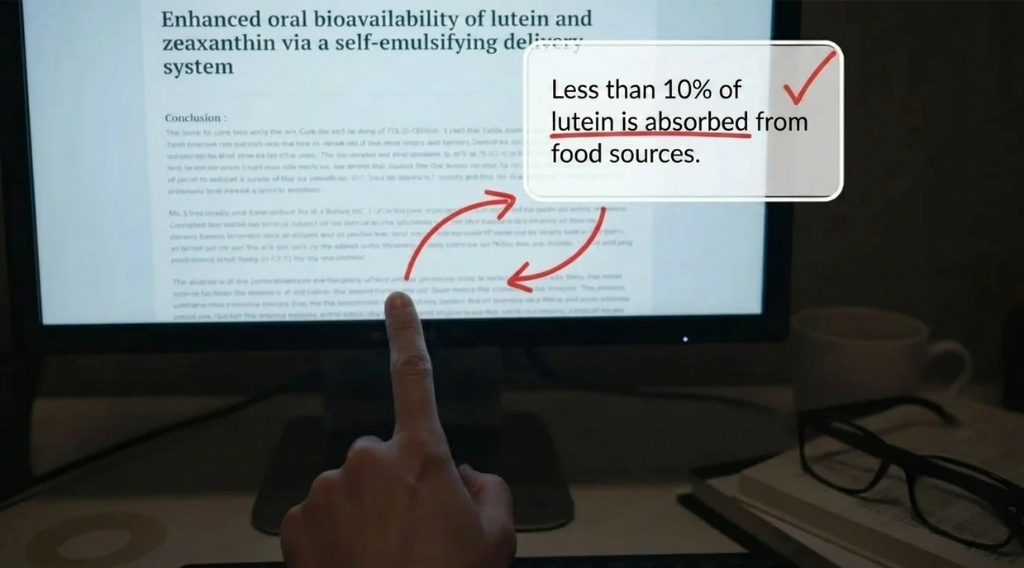
And then I found an article, published in the Journal of Medicinal Food in 2025, which sincerely made me want to punch my screen.
He stated unequivocally that less than 10% of dietary lutein is absorbed by the human body. Less than 10%. Regardless of the source. Including the tablet I had been distributing for eighteen years.
The entire USA ophthalmic supplement industry is based on a lie.
A $850 million lie that keeps you scared, dependent, and with your credit card in hand.
Here's what they don't want you to know:
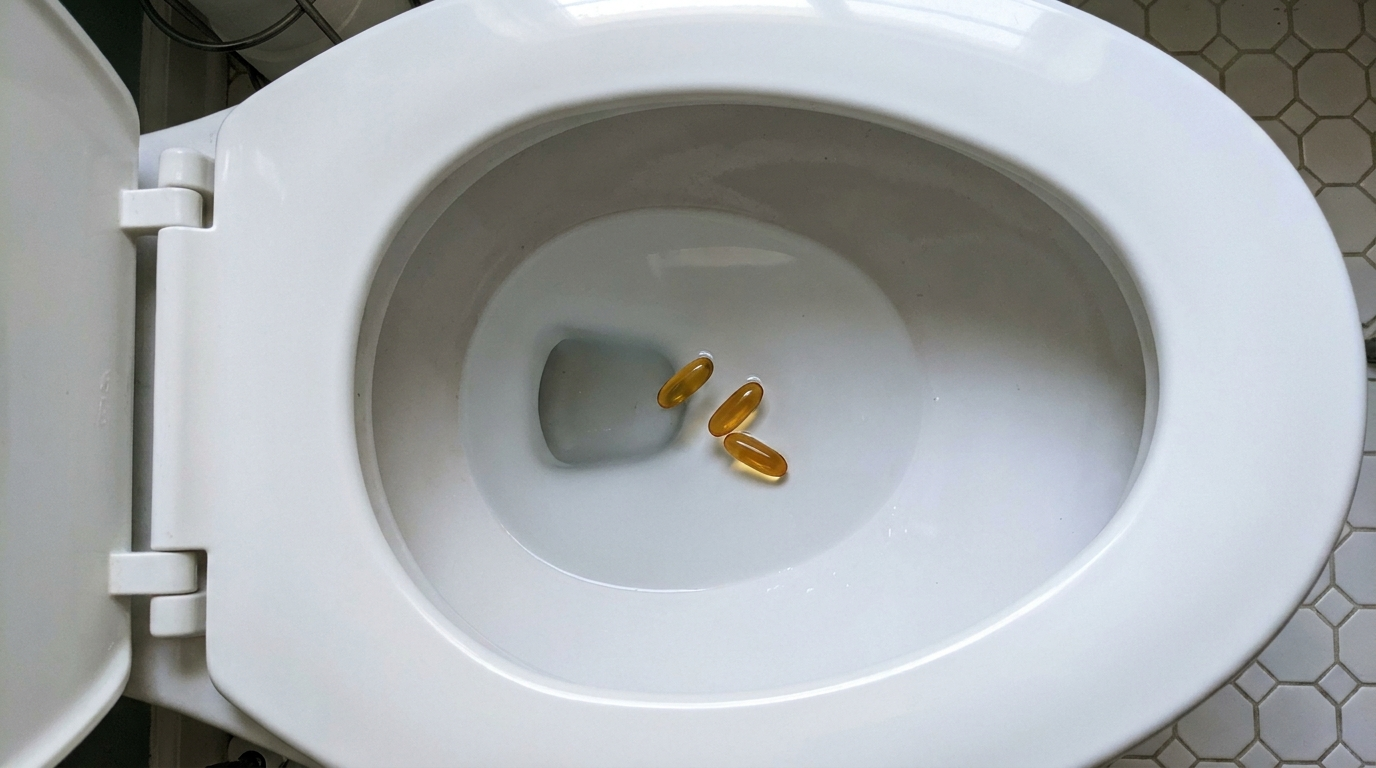
The pill you swallow every morning releases more than 90% of its lutein into your toilet, not into your eyes.
Lutein is a waxy molecule that hates water. Your gut wasn't designed to absorb it. And as you age, your gut absorbs less and less of everything.
This is not a fringe theory.
This is a peer-reviewed result, published in a major scientific journal, that the dietary supplement industry has politely ignored for 30 years because it would wipe out its entire sector overnight.
The true underlying cause of age-related visual decline

Imagine the macula, at the back of your eye, as a small, bright area of yellow pigment, roughly the size of a pinhead.
This yellow color is lutein. It's the natural sunscreen that covers the most precious 1% of your retina, the part that allows you to read, drive, recognize a face across a room, and see the color of your grandchild's eyes.
This yellow area is supposed to be dense. Saturated. Almost golden.
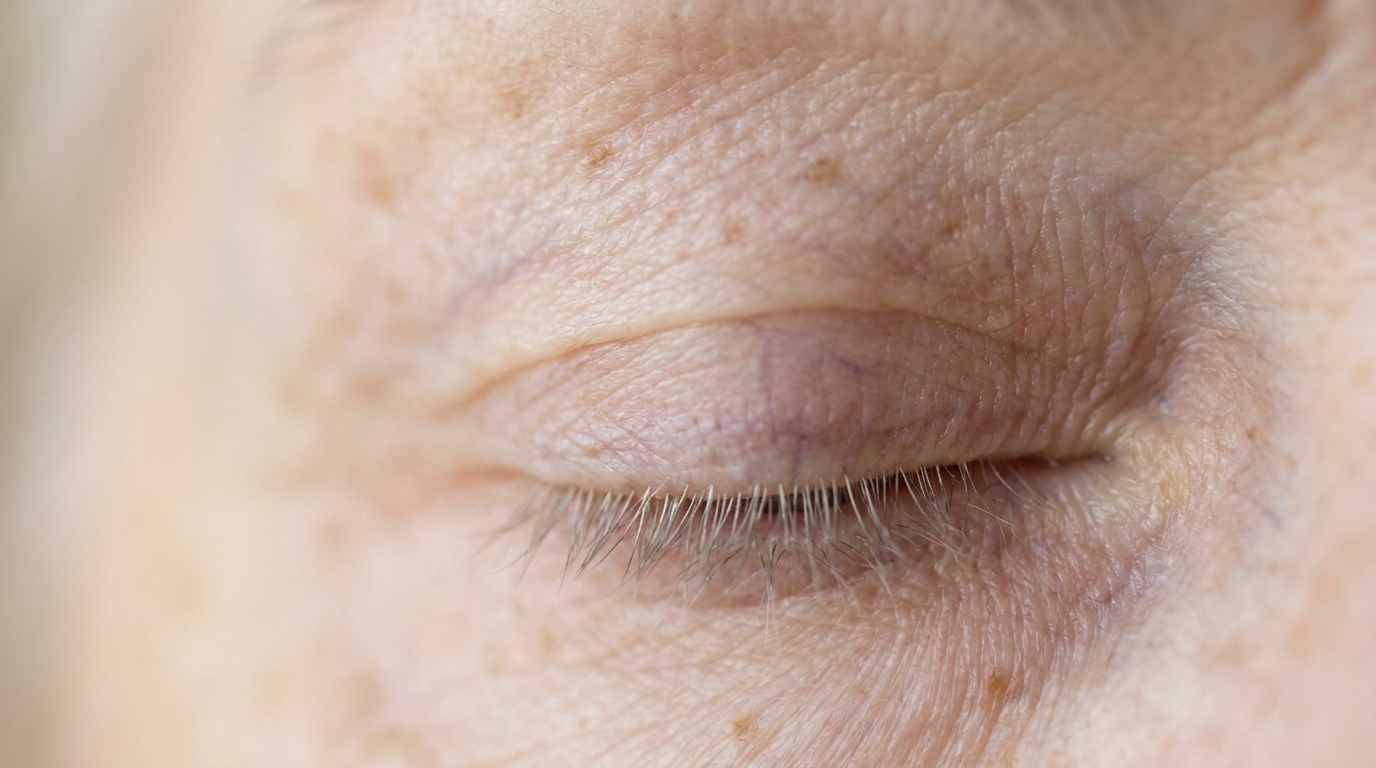
In most USA adults over 55, it isn't. It's pale. Discolored. Thin. Like a lawn that hasn't been watered for two summers.
The macula is, literally, starved for lutein.
This is what I now call "macular famine," and it's the real reason why your eyesight is declining even though you're doing everything you've been told to do.
You eat your kale. You take your pill. You go for your checkups every six months at the Optometrist's. And yet the yellowing at the back of your eye continues to fade.
Because the lutein you swallow doesn't reach it.
That's why the feeling of confusion is what it is…
The grey that spreads across the restaurant menu in the dim light…
Faces that become slightly blurry during a Sunday lunch…
Road signs that look sharp in daylight but resemble smudged ink stamps as soon as it gets dark.
It's the sound of a yellow garden withering away, behind a locked gate.
The science behind this isn't even hidden.
Professor Michael Carter, of the University of Toronto, has been writing for years about macular pigment and visual function.
(His own grandmother went blind because of the very disease to which he now dedicates his research career — which shows you how personal the issue is for those who truly understand it.)
But here is the truth that no one at the top of USA ophthalmology will tell you openly.
There is no money to be made by properly correcting macular famine.
You can't patent a marigold flower.
You can't charge $3,200 to the Provincial Health Insurance for a spray mist.
You can't land a $250,000 Eylea injection contract based on something a patient makes on her own on her bathroom shelf.
So we keep you on the same hamster wheel.
Vague diagnosis → tablet that does not reach the eye → "We will simply monitor" → injections in due course → referrals for surgery in due course → and we start again.
That's genius, truly. Provided you're a sociopath who sees human suffering as a source of income.




































Can anyone confirm this? I’ve tried everything else without success...